|
KOSHER DELIGHT - YOUR JEWISH ONLINE MAGAZINE!
|
| |
 |
 |
|
|
|
|
|
| |
AUSTRALIA
|
|
| |
JEWISH AND KOSHER VICTORIA,
AUSTRALIA:
-
CHABAD
-
ERUV
-
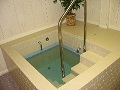
MIKVAH
-
SHABBAT HOSPITALITY
-
ויקטוריה למטייל הישראלי

The Victorian
Parliament House,
built in 1856, stands in
Spring Street,
Melbourne.
Sep 19, 2009. Author:
Donaldytong.
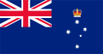
| Capital |
Melbourne |
|
Demonym |
Victorian |
|
Government |
Constitutional monarchy |
| -
Governor |
Alex Chernov |
| -
Premier |
Ted Baillieu (LP) |
|
Australian State |
| - Established as Colony |
1850 |
| - Responsible Government |
1856 |
| - Became State |
1901 |
| - Constitution |
Constitution Act (Vic) 1975 |
| -
Australia Act |
3 March 1986 |
|
Area |
|
| - Total |
237,629 km2 (6th)
91,749 sq mi |
| - Land |
227,416 km2
87,806 sq mi |
| - Water |
10,213 km2 (4.3%)
3,943 sq mi |
|
Population (June 2010) |
| - Population |
5,547,527
(2nd) |
| - Density |
24.39/km2 (2nd)
63.2 /sq mi |
|
Elevation |
|
| - Highest |
Mt Bogong
1,986 m (6,516 ft) |
|
Gross State Product (2009–10) |
| - Product ($m) |
$293,313 (2nd) |
| - Product per capita |
$52,872 (6th) |
| Time zone |
UTC+10 (AEST)
UTC+11 (AEDT) |
|
Federal representation |
| -
House seats |
37 |
| -
Senate seats |
12 |
|
Abbreviations |
|
| - Postal |
VIC |
| -
ISO 3166-2 |
AU-VIC |
|
Emblems |
|
| -
Floral |
Pink Heath
|
| -
Animal |
Leadbeater's possum |
| -
Bird |
Helmeted Honeyeater |
| - Fish |
Weedy Seadragon |
| -
Colours |
Navy Blue and Silver
|
|
Web site |
www.vic.gov.au/ |

Melbourne, the
state capital, is home to more than seven in ten Victorians.
Looking across
Hobsons Bay
towards the
Melbourne central business district.
May 19, 07.
Donaldytong
Victoria is a
state of
Australia, in the south-east of the country.
Geographically the smallest mainland state,
Victoria is bordered by
New South Wales,
South Australia, and
Tasmania on
Boundary Islet to the north, west and south
respectively.

Twelve Apostles on the Great Ocean
Road, Victoria, Australia (looking west).
Author:
User:Gaz/Images
Victoria is Australia's most densely
populated state, and has a highly centralised population,
with almost 75% of Victorians living in
Melbourne, the state capital and largest city.
Etymology
Victoria, like
Queensland, was named after
Queen Victoria, the monarch at the time.
History of
Victoria
Aboriginal history
The state of Victoria was originally home
to many indigenous nations that had occupied the land for
tens of thousands of years.According to
Gary Presland Aborigines have lived in Victoria for
about 40,000 years, living
a semi-nomadic existence of fishing, hunting and gathering,
and farming eels.
At the
Keilor Archaeological Site a human hearth excavated in
1971 was radiocarbon-dated to about 31,000 years
BP, making Keilor one of the earliest sites of human
habitation in Australia.
A
cranium found at the site has been dated at between
12,000 and
14,700 years
BP.
Archaeological sites in
Tasmania and on the
Bass Strait Islands have been dated to between 20,000 –
35,000 years ago, when sea levels were 130 metres below
present level allowing Aboriginal people to move across the
region of southern
Victoria and on to the land bridge of the Bassian plain
to
Tasmania by at least 35,000 years ago.
During the Ice Age about 20,000 years
BP, the area now the bay of
Port Phillip would have been dry land, and the Yarra and
Werribee river would have joined to flow through the heads
then south and south west through the Bassian plain before
meeting the ocean to the west. Tasmania and the Bass Strait
islands became separated from mainland Australia around
12,000
BP, when the sea level was approximately 50m below
present levels.Port Phillip was flooded by post-glacial
rising sea levels between 8000 and 6000 years ago.
Oral history and creation stories from
the
Wada wurrung,
Woiwurrung and
Bun wurrung languages describe the flooding of the bay.
Hobsons Bay was once a kangaroo hunting ground. Creation
stories describe how
Bunjil was responsible for the formation of the bay,
or the bay was flooded when the
Yarra river was created (Yarra Creation Story.
)
Early European exploration
Coming from New Zealand in 1770,
Captain
James Cook in HM Bark
Endeavour sighted land at
Point Hicks, about 70 km west of
Gabo Island, before turning east and north to follow the
coast of Australia.
Ships sailing from the United Kingdom
to
Sydney crossed the Indian Ocean and
Southern Ocean, sailing around
Van Diemen's Land before turning north to their
destination. Several captains viewed the expanse of water
between Van Diemen's Land and the east coast of
New South Wales and wondered whether it was a large bay
or a
strait. Survivors of the
Sydney Cove, wrecked in the
Furneaux Group of islands, also thought it might be a
strait.
To clear up the question, Governor
Hunter sent
George Bass to thoroughly explore the coast in a
whaleboat. After reaching
Wilsons Promontory and
Western Port in January 1798 he was forced by bad
weather and lack of provisions to return to Sydney. Bass
returned with
Matthew Flinders in December 1798 in the
Norfolk and sailed through the strait, proving its
existence.
In December 1800, Lieutenant
James Grant in
HMS Lady Nelson, on way from Cape Town to Sydney,
sailed through Bass Strait from west to east. Governor
King, disappointed at the vagueness of Grant’s chart,
sent him back to survey the strait more thoroughly. Bad
weather prevented him from proceeding beyond Western Port,
where he stayed for five weeks, planting wheat, Indian corn.
peas, rice, coffee and potatoes on
Churchill Island off
Phillip Island.
In January 1802 Lieutenant
John Murray in the Lady Nelson visited Western
Port and entered
Port Phillip on 14 February. He named
Arthur’s Seat, explored
Corio Bay and formally took possession of the bay (which
he named Port King) for Britain.
Three weeks later the French explorer
Nicolas Baudin sailed through the strait from east to
west and was the first to properly survey the coast to the
west.
On 26 April 1802, Flinders, unaware of
Murray’s visit, entered Port Phillip in Investigator,
climbed Arthur’s Seat, rowed to
Mornington and across to the
Bellarine Peninsula and climbed the
You Yangs.
In January 1803 Acting-Lieutenant
Charles Robbins in the schooner
Cumberland sailed right around Port Phillip. With
him were acting surveyor-general
Charles Grimes and gardener James Flemming. At the head
of the bay they found a river and followed it upstream where
it soon divided. They followed the western branch and named
it the Saltwater River (the present
Maribyrnong) to what is now
Braybrook, and then the eastern fresh-water branch (the
Yarra) to
Dights Falls. They had a friendly meeting with
Aboriginal people and returned to their ship via Corio Bay.
They concluded that the best site for a settlement would be
on the freshwater at the northern head of the bay, but were
unenthusiastic about the soil and its agricultural
potential.
1803 British settlement
With Britain involved in the
French revolutionary wars, Governor King was concerned
that Bass Strait could harbour enemy raiders, and that in
peace time it could provide an important trade route and
trading base. The appearance of Baudin’s ships served to
reinforce the concern that France was interested in the
area. King was also looking for an alternative settlement
for the increasing number of
convicts in Sydney and to reduce the pressure on food
resources. Port Phillip, with a favourable climate and rich
fishing and sealing resources, seemed an ideal location for
another settlement.
A full description of Murray’s and
Flinders’ discoveries, together with King’s thoughts on
settlement, but not Grimes’ report, reached England just as
HMS Calcutta was being prepared to send a
shipload of convicts to Sydney. In February 1803,
Lord Hobart the
Secretary of State changed the destination to Port
Phillip. On 24 April 1803, HMS Calcutta, commanded by
Captain
Daniel Woodriff, with Lieutenant-Colonel
David Collins as commander of the expedition, left
England accompanied by the store-ship
Ocean. The expedition consisted of 402 people: 5
Government officials, 9 officers of marines, 2 drummers, and
39 privates, 5 soldiers' wives, and a child, 307 convicts,
17 convicts' wives, and 7 children[12]
One of the children was the eleven year old
John Pascoe Fawkner, later a founder of Melbourne, who
accompanied his convicted father and mother.
The party entered Port Phillip on 9
October 1803 and chose a site at
Sullivan Bay near present-day
Sorrento.Collins was soon
disappointed with the area. Reports from exploring parties
led by Lieutenant James Tuckey and surveyor
George Harris described strong currents, sandy soil,
poor timber, swampy land and scarce fresh water. They also
clashed with the
Wathaurung people near Corio Bay, killing their leader –
the first Aboriginal known to have been killed by settlers
in Victoria.
Collins reported his criticisms to
Governor King, who supported him and recommended moving the
settlement. On 18 December Calcutta departed for
Port Jackson, and the party was prepared for evacuation.
This was achieved in two voyages of Ocean in January
and May 1804, assisted by the Lady Nelson which had
been surveying
Port Dalrymple on the north coast of
Van Diemens Land. The party was transferred to the
fledgling settlement of
Hobart, founded by Lieutenant
John Bowen as a penal colony at
Risdon Cove in September 1803.
The brief settlement at Sorrento
achieved little and left only a few relics for modern
tourists to observe. Collins has been criticised for not
investigating the bay thoroughly, in particular the northern
head with its fresh-water river, and for being too hasty in
his condemnation of the bay. The site of the settlement is
now a reserve incorporating four graves from the period.
When Collins departed, one man was
left behind. A convict,
William Buckley, had escaped and was presumed killed by
Aborigines. He was to see his next European in 1835.
For the next thirty years a few
sealers and whalers rested on the southern coast of New
South Wales.
Interest grows in the north
coast of Bass Strait
Following a number of exploratory
expeditions south from the settled areas of New South Wales,
the pastoralist
Hamilton Hume and former sea-captain
William Hovell set off to explore the country to the
south in October 1824. They crossed the
Murray River (which they named the Hume River) near the
site of
Albury and continued south. They crossed the
Goulburn River (which they called the Hovell) above the
site of
Yea, and were forced to detour around mountains. They
arrived on the shores of
Corio Bay, mistakenly believing it to be Western Port,
and returned to Sydney in January 1825, lavishly praising
the quality of the country they had passed through.
In April 1826 the French explorer
d'Urville visited one of the sealers’ camps on Phillip
Island. Worried by this renewed French interest in the area
and encouraged by Hume and Hovell’s reports, Governor
Darling ordered a settlement to be established at
Western Port. A small convict party arrived in November 1826
at
Corinella under the command of Samuel Wright, to protect
the approaches to the bay. Hovell, accompanying the party,
soon realised that this was not where he had arrived two
years before, and reported unfavourably on the swampy land
around Western Port, although he referred to better land to
the north. In spite of clearing the land for crops, and the
construction of a fort and houses, the settlement was
abandoned in April 1828.
The shortage of good pasture in Van
Diemen's Land led to settlers there showing interest in the
country across Bass Strait, following Hume and Hovell’s
reports and stories of visiting sealers. Pastoralist
John Batman and surveyor
John Wedge planned an expedition from
Launceston in 1825 but permission was not granted. A
number of settlers sought land over the next few years, but
Governor Darling turned down all requests.
A sealer William Dutton built a hut on
the shore of
Portland Bay in 1829 where he resided until his death.
The expedition down the Murray River
by
Charles Sturt in 1830 again aroused interest in
settlement in the south. In April 1833
Edward Henty, returning to Van Diemen's Land from
Spencer Gulf called in to Portland for a cargo of oil,
and was much impressed. In November 1834
John Hart, another sailor, reported favourably in
Launceston on Western Port. It was now inevitable that
settlement would occur.
In June 1834 banker
Charles Swanston advised his client
George Mercer that land was scarce in Van Diemen's Land
and he should invest across Bass Strait. Pastoralists John
Aitken and George Russell suggested forming a partnership,
and in August 1834 a group of eight Launceston capitalists
formed what became the
Port Phillip Association. On 19 November 1834 Edward
Henty landed in
Portland Bay and began the first permanent European
settlement on the north coast of Bass Strait.
1834 permanent settlement
Victoria's first successful British
settlement was at
Portland, on the west coast of what is now Victoria.
Portland was settled on 19 November 1834
by the
Henty family, who were originally farmers from
Van Diemen's Land (Tasmania). When Major Mitchell led an
expedition to the region from Sydney in 1835, arriving at
Portland in August 1836, he was surprised to find a small
but prosperous community living off the fertile farmland.
With the dispossession of Aboriginal
tribes from their lands with the establishment of sheep runs
by squatters, conflict over resources and land use
inevitably occurred. One highly notable incident called the
Convincing Ground massacre occurred in Portland Bay in
1833 or 1834 in a possible dispute about a
Beached whale between whalers and the Kilcarer
gundidj clan of the
Gunditjmara people.
Melbourne was founded in 1835 by
John Batman, also from
Van Diemen's Land and quickly grew into a thriving
community, although at great human cost to the original
inhabitants. Its foundation was the result of an invasion of
wealthy squatters, land speculators and their indentured
servants (including ex-convicts) who arrived from 1835, in a
race with one another to seize an 'empty' country. The
British Crown and colonial governments did not recognize
prior Aboriginal ownership of their lands, waters and
property, in spite of claiming that Aborigines fell within
the protection of the law as British subjects.
Early in 1835, Mr Franks, one of the
first immigrants, and his shepherd were killed by some of
the Goulburn tribe of aborigines. His station was near
Cotterill's Mount, called the Sugarloaf, near the river Exe,
now Werribee. They were both killed at one moment by the
aborigines, who while pretending friendship, murdered them
by driving their tomahawks into the backs of their heads. A
party was soon sent out after them, led by tour of the
Melbourne tribe, who recovered part of the property stolen,
and took vengeance on the murderers.
Between 1836 and 1842, Victorian
Aboriginal groups were largely dispossessed of territory
bigger than England.
Although the British Colonial Office appointed 5 "Aboriginal
Protectors" for the entire Aboriginal population of
Victoria, arriving in Melbourne in 1839, they worked
"...within a land policy that nullified their work, and
there was no political will to change this." "It was
government policy to encourage squatters to take possession
of whatever [Aboriginal] land they chose,....that largely
explains why almost all the original inhabitants of Port
Phillip's vast grasslands were dead so soon after 1835".
By 1845, fewer than 240 wealthy Europeans
held all the pastoral licences then issued in Victoria and
became the patriarchs "...that were to wield so much
political and economic power in Victoria for generations to
come."
The first petition for the separation
of the Port Phillip District (or 'Australia Felix') from
New South Wales was drafted in 1840 by
Henry Fyshe Gisborne and presented by him to
Governor Gipps. Gipps, who had previously been in favour
of separation, rejected the petition.
In the years 1842 and 1843 a severe
financial crisis occurred, mainly due to the Government
demanding from the banks the large rate of 7 per cent for
all moneys deposited with them, the result of land sales.
The banks had to charge their customers from 10 to 12 per
cent for loans, very often on questionable securities. It
was then accerlerated by Lord John Russell's instructions
that all lands out of town boundaries to be sold at only Ł1
per acre. Sheep that had been bought at from 30s to 40s per
head are now sold at less than 2s. The Insolvent Court was
rushed by all classes of the community.
The British Act of Parliament
separating Victoria from New South Wales, and naming and
providing a Constitution for the new Colony, was signed ten
years later by
Queen Victoria on 5 August 1850. It was followed by
enabling legislation passed by the
New South Wales Legislative Council on 1 July 1851. This
was formally the founding moment of the Colony of Victoria
as separation from New South Wales was established by
Section 1 of the 1851 Act.
1850s gold rush
In
1851
gold was first discovered in
Clunes near
Ballarat, and
subsequently at
Bendigo. Later discoveries occurred at many sites across
Victoria. This triggered one of the largest gold rushes the
world has ever seen. The colony grew rapidly in both
population and economic power. In ten years the population
of Victoria increased sevenfold from 76,000 to 540,000. All
sorts of gold records were produced including the "richest
shallow alluvial goldfield in the world" and the
largest gold nugget. Victoria produced in the decade
1851-1860, twenty million ounces of gold, one third of the
world's output.
Immigrants arrived from all over the
world to search for gold, especially from Ireland and China.
Many Chinese miners worked in Victoria, and their legacy is
particularly strong in
Bendigo and its environs. Although there was some
racism directed at them, there was not the level of
anti-Chinese violence that was seen at the
Lambing Flat riots in New South Wales. However, there
was a
riot at Buckland Valley near
Bright in
1857. Conditions on the gold fields were cramped and
unsanitary - an outbreak of
typhoid at Buckland Valley in
1854 killed over 1,000 miners.
In
1854 there was an armed rebellion against the government
of Victoria by miners protesting against
mining taxes (the "Eureka
Stockade"). This was crushed by British troops, but some
of the leaders of the rebellion subsequently became members
of the Victoria Parliament, and the rebellion is still
sometimes regarded as a pivotal moment in the development of
Australian democracy.
The first foreign military action by
the colony of Victoria was to send troops and a warship to
New Zealand as part of the
Maori Wars. Troops from New South Wales had previously
participated in the
Crimean War.
Depression of 1893
A period of prosperity in the 1880's
led to a wild speculation in land and buildings, and money
was poured in from England. Land companies, mortgage
societies, municipal bodies, building societies, and a host
of other organisations all clamoured for a share in the good
things that were on offer, and probably Ł40,000,000 flowed
into Victoria during a period of six years. With so much
easy money In circulation, a fictitious prosperity of a
feverish sort resulted. The banks issued notes to the value
of millions, and trade and Industry flourished as never
before. The reaction came quickly. Public confidence
subsided like a pricked balloon. A run commenced on the
banks, and the bursting of the boom brought with lt
widespread disaster.
In 1893, 14 banks failed, twelve of
those, with 905 branches throughout Australia, had
liabilities assessed at Ł166,000,000, and thousands of
people lost the whole of their possessions. Bank notes in
many cases were worthless, and Victoria reached the farthest
depth of a financial depression. Unemployment became
widespread, wages and prices dropped and bankruptcies
followed one another In disturbing sequence. The most
drastic retrenchments were made by the Government and public
bodies.
1901 federation
At the beginning of
1901, following a
proclamation by
Queen Victoria, Victoria ceased to be an independent
colony and became a state in the
Commonwealth of Australia. Victorian and Tasmanian
politicians were particularly active in the
Federation process.As a
result of the gold rush,
Melbourne became the financial centre of Australia and
New Zealand. Between 1901 and 1927, Melbourne was the
capital of Australia while
Canberra was under construction. It was also the largest
city in Australia at the time, and the second largest city
in the
Empire (after London). Whilst Melbourne remains an
important financial centre, Sydney is now the largest city.
1990s economic slump
Victoria experienced an economic slump
from 1989 to 1992 during the term of
John Cain's government. This was largely attributable to
lagging property markets and manufacturing sectors as well
as a financial crash involving industry giants such as the
Pyramid Building Society and the collapse of The
State Bank of Victoria, in particular its merchant
banking arm Tricontinental. The result was a loss of
employment and a drain of population to
New South Wales and Queensland.
In the 1990s, the Victorian state
government of
Premier
Jeff Kennett (Lib)
sought to reverse this trend with the aggressive development
of new public works, mainly centred around the state capital
of Melbourne. These included the
Melbourne Museum,
Federation Square, the
Melbourne Exhibition and Convention Centre (nicknamed "Jeff's
Shed"),
Crown Casino, capital works such as the
CityLink tollway, the sale of state assets (including
the
State Electricity Commission and some state schools),
the pruning of state services and a public relations
campaign promoting Melbourne's merits, aimed at Melbourne
residents and visitors alike. These policies were continued
under the governments of Premiers
Steve Bracks (ALP)
and
John Brumby (ALP).
See
also
References
-
Richard Broome, Aboriginal Victorians: A History
Since 1800, Allen & Unwin, 2005,
ISBN 1-74114-569-4,
ISBN 978-1-74114-569-4
-
A. G. L. Shaw, A History of the Port Phillip
District: Victoria before separation, Melbourne, MUP,
1996. (ISBN
0-522-85064-2).
-
Marjorie Tipping, Convicts Unbound: The story of
the Calcutta convicts and their settlement in Australia,
Melbourne, Viking O’Neil, 1988. (ISBN
0-670-90068-0).
- Jenny Fawcett,"Captain Henry
Wishart of Port Fairy Bay", Warrnambool,Collett,Bain &
Gaspar, 2005 www.genseek.net/pioneers.htm
External links
--
After the founding of the
colony of New South Wales in 1788, Australia was
divided into an eastern half named New South
Wales and a western half named
New Holland, under the
administration of the colonial government in
Sydney. The first European settlement in the
area later known as Victoria was established in
October 1803 under Lieutenant-Governor
David Collins at
Sullivan Bay, Victoria on
Port Phillip. It consisted of 402 people (5
Government officials, 9 officers of marines, 2
drummers, and 39 privates, 5 soldiers' wives,
and a child, 307 convicts, 17 convicts' wives,
and 7 children).
They had been sent from England in
HMS Calcutta under the command of
Captain
Daniel Woodriff, principally out of fear
that the French, who had been exploring the
area, might establish their own settlement and
thereby challenge British rights to the
continent.In the
year 1826 Colonel Stewart, Captain S. Wright,
and Lieutenant Burchell were sent in H.M.S. Fly
(Captain Wetherall) and the brigs Dragon
and Amity, took a number of convicts and
a small force composed of detachments of the 3rd
and 93rd regiments. The expedition landed at
Settlement Point (now
Corinella), on the eastern side of the bay,
which was the headquarters until the abandonment
of Western Port at the instance of Governor
Darling about twelve months afterwards.
Victoria's next settlement
was at
Portland, on the west coast of what is now
Victoria.
Edward Henty settled Portland Bay in
1834.Melbourne was founded in 1835 by
John Batman and
John Pascoe Fawkner. From settlement the
region around Melbourne was known as the Port
Phillip District, a separately administered part
of New South Wales.
Creation of separate
colony of Victoria
On 1 July 1851, writs were
issued for the election of the first Victorian
Legislative Council, and the absolute
independence of Victoria from New South Wales
was established proclaiming a new Colony of
Victoria. Days
later, still in 1851 gold was discovered near
Ballarat, and subsequently at
Bendigo. Later discoveries occurred at many
sites across Victoria. This triggered one of the
largest gold rushes the world has ever seen.
The colony grew rapidly in both population and
economic power. In ten years the population of
Victoria increased sevenfold from 76,000 to
540,000. All sorts of gold records were produced
including the "richest shallow alluvial
goldfield in the world" and the
largest gold nugget. Victoria produced in
the decade 1851–1860 20 million ounces of gold,
one third of the world's output
Immigrants arrived from all
over the world to search for gold, especially
from Ireland and China. Many Chinese miners
worked in Victoria, and their legacy is
particularly strong in Bendigo and its environs.
Although there was some racism directed at them,
there was not the level of anti-Chinese violence
that was seen at the
Lambing Flat riots in New South Wales.
However, there was a
riot at Buckland Valley near
Bright in 1857. Conditions on the gold
fields were cramped and unsanitary; an outbreak
of typhoid at Buckland Valley in 1854 killed
over 1,000 miners.
In 1854 at Ballarat there was an armed rebellion
against the government of Victoria by miners
protesting against
mining taxes (the "Eureka
Stockade"). This was crushed by British
troops, but the discontents prompted colonial
authorities to reform the administration
(particularly reducing the hated mining licence
fees) and extend the franchise. Within a short
time, the Imperial Parliament granted Victoria
responsible government with the passage of the
Colony of Victoria Act 1855. Some of the leaders
of the Eureka rebellion went on to became
members of the Victorian Parliament.
The first foreign military
action by the colony of Victoria was to send
troops and a warship to New Zealand as part of
the
Māori Wars. Troops from New South Wales had
previously participated in the
Crimean War.
In 1901 Victoria became a
state in the
Commonwealth of Australia. As a result of
the gold rush, Melbourne had by then become the
financial centre of Australia and New Zealand.
Between 1901 and 1927, Melbourne was the capital
of Australia while
Canberra was under construction. It was also
the largest city in Australia at the time.
Government
Parliament
Victoria has a
parliamentary form of government based on the
Westminster System. Legislative power
resides in the Parliament consisting of the
Governor (the representative of the Queen), the
executive (the Government), and two legislative
chambers. The
Parliament of Victoria consists of the lower
house
Legislative Assembly, the upper house
Legislative Council and the
Queen of Australia.
Eighty-eight members of
the Legislative Assembly are elected to
four-year terms from single-member electorates.
In November 2006, the
Victorian Legislative Council elections were
held under a new multi-proportional
representation system. The State of Victoria was
divided into eight electorates with each
electorate represented by five representatives
elected by
Single Transferable Vote
proportional representation. The total
number of upper house members was reduced from
44 to 40 and their term of office is now the
same as the lower house members—four years.
Elections for the Victorian Parliament are now
fixed and occur in November every four years.
Prior to the 2006 election, the Legislative
Council consisted of 44 members elected to
eight-year terms from 22 two-member electorates.
Premier and cabinet
The
Premier of Victoria is the leader of the
political party or coalition with the most seats
in the Legislative Assembly. The Premier is the
public face of government and, with cabinet,
sets the legislative and political agenda.
Cabinet consists of representatives elected to
either house of parliament. It is responsible
for managing areas of government that are not
exclusively the Commonwealth's, by the
Australian Constitution, such as education,
health and law enforcement. The current Premier
of Victoria is
Ted Baillieu.
Governor
Executive authority is
vested in the
Governor of Victoria who represents and is
appointed by
Queen Elizabeth II. The post is usually
filled by a retired prominent Victorian. The
governor acts on the advice of the premier and
cabinet. The current Governor of Victoria is
Alex Chernov.
Constitution
Victoria has
a written constitution. Enacted in 1975, but
based on the 1855 colonial constitution
, it establishes the parliament as the
state's law-making body for matters coming under
state responsibility. The Victorian Constitution
can be amended by the parliament of Victoria.
Under new provisions to be enacted, changes to
the Victorian Constitution will be subjected to
a plebiscite of votes, voting in a referendum.
Politics
Premier
Ted Baillieu leads a
Liberal/National Coalition that won the
November 2010 Victorian state election.
The centre-left
Australian Labor Party (ALP), the
centre-right
Liberal Party of Australia and the
rural-based
National Party of Australia are Victoria's
major political parties. Traditionally, Labor is
strongest in Melbourne's inner, working class
and western and northern suburbs, Morwell,
Ballarat, Bendigo and Geelong. The Liberals'
main support lies in Melbourne's more affluent
eastern and outer suburbs, and some rural and
regional centres. The Nationals are strongest in
Victoria's North Western and Eastern rural
regional areas.
Federal government
Victorian voters elect 49
representatives to the
Parliament of Australia, including 37
members of the
House of Representatives and 12 members of
the
Senate. Since 2010, the ALP has held 22
Victorian house seats, the Liberals 12, the
Nationals two and the Greens one. As of 1 July
2008, the Liberals have held six senate seats,
the ALP five and the
Family First Party one.
Local government
Victoria is incorporated
into 79 municipalities for the purposes of local
government, including 39 shires, 32 cities,
seven rural cities and one borough. Shire and
city councils are responsible for functions
delegated by the Victorian parliament, such as
city planning, road infrastructure and waste
management. Council revenue comes mostly from
property taxes and government grants.
|
Source:
Victorian Parliamentary Library,
Department of Victorian Communities,
Australian Electoral Commission |
Demographics
The 2006 Australian census
reported that Victoria had 4,932,422 people
resident at the time of the census, an increase
of 6.2% on the 1996 figure. The
Australian Bureau of Statistics estimates
that in June 2010 the state's population reached
5,547,500, an increase of 1.8% from the previous
year and may well reach 7.2 million by 2050.
Victoria's founding
Anglo-Celtic population has been
supplemented by successive waves of
migrants from southern and eastern Europe,
Southeast Asia and, most recently, the
Horn of Africa and the Middle East.
Victoria's population is ageing in proportion
with the average of the remainder of the
Australian population.
About 72% of Victorians
are Australian-born. This figure falls to around
66% in Melbourne but rises to higher than 95% in
some rural areas in the north west of the state.
Around two-thirds of Victorians claim
Australian, Scottish, English or Irish ancestry.
Less than 1% of Victorians identify themselves
as
Aboriginal. The largest groups of people
born outside Australia came from the British
Isles, China,
Italy,
Vietnam,
Greece and New Zealand.
More than 70% of
Victorians live in Melbourne, located in the
state's south. The greater Melbourne
metropolitan area is home to an estimated
3.9 million people.
Leading urban centres outside
Melbourne include
Geelong,
Ballarat,
Bendigo,
Shepparton,
Mildura,
Warrnambool,
Wodonga and the
Latrobe Valley.
Victoria is Australia's most
urbanised state: nearly 90% of residents living
in cities and towns. State Government efforts to
decentralise population have included an
official campaign run since 2003 to encourage
Victorians to settle in regional areas, however
Melbourne continues to rapidly outpace these
areas in terms of population growth.
Age
structure and fertility
The government predicts
that nearly a quarter of Victorians will be aged
over 60 by 2021. The 2006 census reveals that
Australian
average age has crept upward from 35 to 37
since 2001, which reflects the
population growth peak of 1969–72.
In 2007, Victoria recorded a
TFR of 1.87, the highest after 1978.
Crime
The state of Victoria is
divided into four geographical regions;
North-West Metropolitan Region, Southern
Metropolitan Region, Eastern Region, Western
Region. In 2010-2011 there were 152 homicides
within the state of Victoria.
Religion
About 60.5% of Victorians
describe themselves as Christian. Roman
Catholics form the single largest religious
group in the state with 27.5% of Victorian
population, followed by Anglicans and members of
the Uniting Church. Catholics and Protestants
(including Anglicans) in Victoria each form
around 30% of the population. Buddhism, the
state's largest non-Christian religion, is also
the fastest growing with 132,634. Victoria is
also home of 109,370
Muslims and 41,105
Jews. Around 20% of Victorians claim no
religion, and even amongst those who declare a
religious affiliation, church attendance is low.
In 2008, the levels of
couples choosing to marry in a church had
dropped to 36%; the other 64% chose to register
their marriage with a civil celebrant.
Education
Primary and secondary
Victoria's
state school system dates back to 1872, when
the colonial government legislated to make
schooling both free and compulsory. The state's
public secondary school system began in 1905.
Before then, only private secondary schooling
was available. Today, a Victorian school
education consists of seven years of primary
schooling (including one preparatory year) and
six years of secondary schooling.
The final years of
secondary school are optional for children aged
over 17. Victorian children generally begin
school at age five or six. On completing
secondary school, students earn the Victorian
Certificate of Education. Students who
successfully complete their secondary education
also receive a tertiary entrance ranking, or
ATAR score, to determine university admittance.
Victorian schools are
either publicly or privately funded. Public
schools, also known as state or government
schools, are funded and run directly by the
Victoria Department of Education . Students
do not pay tuition fees, but some extra costs
are levied. Private fee-paying schools include
parish schools run by the Roman Catholic Church
and independent schools similar to English
public schools. Independent schools are usually
affiliated with Protestant churches. Victoria
also has several private Jewish and Islamic
primary and secondary schools. Private schools
also receive some public funding. All schools
must comply with government-set curriculum
standards. In addition, Victoria has four
government
selective schools,
Melbourne High School for boys,
MacRobertson Girls' High School for girls,
the coeducational schools
John Monash Science School,
Nossal High School and
Suzanne Cory High School, and The Victorian
College of the Arts Secondary School. Students
at these schools are exclusively admitted on the
basis of a selective entry test.
As of August 2010,
Victoria had 1,548 public schools, 489 Catholic
schools and 214 independent schools. Just under
540,800 students were enrolled in public
schools, and just over 311,800 in private
schools. Over 61 per cent of private students
attend Catholic schools. More than 462,000
students were enrolled in primary schools and
more than 390,000 in secondary schools.
Retention rates for the final two years of
secondary school were 77 per cent for public
school students and 90 per cent for private
school students. Victoria has about 63,519
full-time teachers.
Tertiary
education
Victoria has
nine universities. The first to offer
degrees, the
University of Melbourne, enrolled its first
student in 1855. The largest,
Monash University, has an enrolment of
nearly 56,000 students—more than any other
Australian university. Both the University of
Melbourne and Monash University are ranked
highly among the world's best universities
requiring a high entry score, or passing of
mature age entrance exams for student admission
into their courses.
The number of students enrolled in Victorian
universities was 241,755 at 2004, an increase of
2% on the previous year. International students
made up 30% of enrolments and account for the
highest percentage of pre-paid university
tuition fees. The largest number of enrolments
were recorded in the fields of business,
administration and economics, with nearly a
third of all students, followed by arts,
humanities, and social science, with 20% of
enrolments.
Victoria has 18
government-run institutions of “technical and
further education” (TAFE).
The first vocational institution in the state
was the Melbourne Mechanics' Institute
(established in 1839), which is now the
Melbourne Athenaeum. More than 1,000 adult
education organisations are registered to
provide recognised TAFE programs. In 2004, there
were about 480,700 students enrolled in
vocational education programs in the state.
|
Source:
Australian Bureau of Statistics,
Department of Education and Training
(Victoria), Department of Education,
Science and Training (Commonwealth),
National Centre for Vocational Education
Research |
Libraries
The
State Library of Victoria is the State's
research and reference library. It is
responsible for collecting and preserving
Victoria's documentary heritage and making it
available through a range of services and
programs. Material in the collection includes
books, newspapers, magazines, journals,
manuscripts, maps, pictures, objects, sound and
video recordings and databases.
In addition,
local governments maintain local lending
libraries, typically with multiple branches in
their respective municipal areas.
Economy
The state of Victoria is the
second largest economy in Australia after New
South Wales, accounting for a quarter of the
nation's gross domestic product. The total
gross state product (GSP) at current prices
for Victoria was at just over A$293 billion,
with a GSP per capita of A$52,872. The economy
grew by 2.0 per cent in 2010, less than the
Australian average of 2.3 per cent.
Finance, insurance and
property services form Victoria's largest income
producing sector, while the community, social
and personal services sector is the state's
biggest employer. Despite the shift towards
service industries, the troubled manufacturing
sector remains Victoria's single largest
employer and income producer. As a result of job
losses in declining sectors such as
manufacturing, Victoria has the highest
unemployment rate in Australia as of September
2009.
Victorian
production and
workers by economic activities |
Economic
sector |
GSP
produced |
Number of
workers |
Percentage
of workers |
Finance, insurance
and property |
30.5% |
319,109 |
15.3% |
Community, social
and personal services |
16.6% |
562,783 |
27.4% |
|
Manufacturing |
15.4% |
318,218 |
15.3% |
Wholesale and
retail trade |
12.1% |
423,328 |
20.3% |
Transport, utilities
and communications |
10.6% |
133,752 |
6.4% |
|
Construction |
6.2% |
136,454 |
6.6% |
|
Government |
4% |
62,253 |
3% |
|
Agriculture |
3.3% |
72,639 |
3.5% |
|
Mining |
1.3% |
4,472 |
0.2% |
|
Other |
– |
49,208 |
2% |
|
Source: Australian
Bureau of Statistics. Figures are for 2004–2005 |
Agriculture
During 2003–04, the gross value of
Victorian agricultural production increased by 17% to
$8.7 billion. This represented 24% of national agricultural
production total gross value. As of 2004, an estimated
32,463 farms occupied around 136,000 square kilometres
(52,500 sq mi) of Victorian land. This comprises more than
60% of the state's total land surface. Victorian farms range
from small horticultural outfits to large-scale livestock
and grain productions. A quarter of farmland is used to grow
consumable crops.More than
26,000 square kilometres (10,000 sq mi) of Victorian
farmland are sown for grain, mostly in the state's west.
More than 50% of this area is sown for wheat, 33% for barley
and 7% for oats. A further 6,000 square kilometres
(2,300 sq mi) is sown for hay. In 2003–04, Victorian farmers
produced more than 3 million tonnes of wheat and 2 million
tonnes of barley. Victorian farms produce nearly 90% of
Australian pears and third of apples. It is also a leader in
stone fruit production. The main vegetable crops include
asparagus, broccoli, carrots, potatoes and tomatoes. Last
year, 121,200 tonnes of pears and 270,000 tonnes of tomatoes
were produced.
More than 14 million sheep and
5 million lambs graze over 10% of Victorian farms, mostly in
the state's north and west. In 2004, nearly 10 million lambs
and sheep were slaughtered for local consumption and export.
Victoria also exports live sheep to the Middle East for meat
and to the rest of the world for breeding. More than 108,000
tonnes of wool clip was also produced—one-fifth of the
Australian total.
Victoria is the centre of dairy
farming in Australia. It is home to 60% of Australia's
3 million dairy cattle and produces nearly two-thirds of the
nation's milk, almost 6.4 million litres. The state also has
2.4 million beef cattle, with more than 2.2 million cattle
and calves slaughtered each year. In 2003–04, Victorian
commercial fishing crews and aquaculture industry produced
11,634 tonnes of seafood valued at nearly A$109 million.
Blacklipped
abalone is the mainstay of the catch, bringing in
A$46 million, followed by southern
rock lobster worth A$13.7 million. Most abalone and rock
lobster is exported to Asia.
Manufacturing
Machinery and equipment manufacturing
is the state's most valuable manufacturing activity,
followed by food and beverage manufacturing and petroleum,
coal and chemical manufacturing. More than 15% Victorian
workers are employed in manufacturing industries. Victoria
has 318,000 manufacturing workers. The state is marginally
behind New South Wales in the value of manufacturing output.
Major industrial plants belong to the
car manufacturers
Ford,
Toyota and
Holden;
Alcoa's
Portland and
Point Henry aluminium smelters; oil refineries at
Geelong and
Altona; and a major petrochemical facility at
Laverton.
Victoria also plays an important role
in providing goods for the
defence industry. Melbourne is the centre of
manufacturing in Victoria, followed by
Geelong. Energy production has aided industrial growth
in the
Latrobe Valley.
Mining
Mining in Victoria contributes around
A$3 billion to the gross state product (~1%) but employs
less than 1% of workers. The Victorian mining industry is
concentrated on energy producing minerals, with
brown coal, petroleum and
gas accounting for nearly 90% of local production. The
oil and gas industries are centred off the coast of
Gippsland in the state's east, while brown coal mining
and power generation is based in the
Latrobe Valley.
In the 2005/2006 fiscal year, the
average gas production was over 700 million cubic feet
(20,000,000 m3) per day (M cuft/d) and
represented 18% of the total national gas sales, with demand
growing at 2% per year.
In 1985, oil production from the
offshore Gippsland Basin peaked to an annual average of
450,000 barrels (72,000 m3) per day. In
2005–2006, the average daily oil production declined to
83,000 bbl (13,200 m3)/d, but despite the decline
Victoria still produces almost 19.5% of crude oil in
Australia.
Brown coal is Victoria's leading mineral, with 66
million tonnes mined each year for electricity generation in
the Latrobe Valley, Gippsland. The region is home to the
world's largest known reserves of brown coal.
Despite being the historic centre of
Australia's gold rush, Victoria today contributes a mere 1%
of national gold production. Victoria also produces limited
amounts of
gypsum and
kaolin.
Service industry
The service industries sector is the
fastest growing component of the Victorian economy. It
includes the wide range of activities generally classified
as community, social and personal services; finances,
insurance and property services, government services,
transportation and communication, and wholesale and retail
trade. Most service industries are located in Melbourne and
the state's larger regional centres.
As of 2004–05, service industries
employed nearly three-quarters of Victorian workers and
generated three-quarters of the state's GSP. Finance,
insurance and property services, as a group, provide a
larger share of GSP than any other economic activity in
Victoria. More than a quarter of Victorian workers are
employed by the community, social and personal services
sector.
Geology and
geography
Victoria's northern border is the
southern bank of the
Murray River. It also rests at the southern end of the
Great Dividing Range, which stretches along the east
coast and terminates west of Ballarat. It is bordered by
South Australia to the west and shares Australian's shortest
land border with
Tasmania. The official border between Victoria and
Tasmania is at 39°12' S, which passes through
Boundary Islet in the
Bass Strait for 85 metres.
Victoria contains many
topographically, geologically and climatically diverse
areas, ranging from the wet,
temperate climate of
Gippsland in the southeast to the snow-covered
Victorian alpine areas which rise to almost 2,000 metres
(6,500 ft), with
Mount Bogong the highest peak at 1,986 m; (6,516 ft).
There are extensive semi-arid plains to the west and
northwest. There is an extensive series of river systems in
Victoria. Most notable is the
Murray River system. Other rivers include:
Ovens River,
Goulburn River,
Patterson River,
King River,
Campaspe River,
Loddon River,
Wimmera River,
Elgin River,
Barwon River,
Thomson River,
Snowy River,
Latrobe River,
Yarra River,
Maribyrnong River,
Mitta River, Hopkins River, Merri River and
Kiewa River. The state symbols include the
Pink Heath (state flower),
Leadbeater's Possum (state animal) and the
Helmeted Honeyeater (state bird).
The state's capital, Melbourne,
contains approximately 70% of the state's population and
dominates its economy, media, and culture. For other cities
and towns, see
List of localities (Victoria) and
Local Government Areas of Victoria.
Transport
Victoria has the highest population
density in any state in Australia, with population centres
spread out over most of the state; only the far northwest
and the
Victorian Alps lack permanent settlement.
The
Victorian road network services the population centres,
with highways generally radiating from Melbourne and other
major cities and rural centres with secondary roads
interconnecting the highways to each other. Many of the
highways are built to freeway standard ("M" freeways), while
most are generally sealed and of reasonable quality.
Rail transport in Victoria is provided by several
private and public railway operators who operate over
government-owned lines. Major operators include:
Metro Trains Melbourne which runs an extensive,
electrified, passenger system throughout Melbourne and
suburbs;
V/Line which is now owned by the Victorian Government,
operates a concentrated service to major regional centres,
as well as long distance services on other lines;
Pacific National,
CFCLA,
El Zorro which operate freight services;
Great Southern Railway which operates
The Overland Melbourne—Adelaide; and
CountryLink which operates
XPTs Melbourne—Sydney.There
are also several smaller freight operators and numerous
tourist railways operating over lines which were once parts
of a state-owned system. Victorian lines mainly use the
5 ft 3 in (1,600 mm)
broad gauge. However, the interstate trunk routes, as
well as a number of branch lines in the west of the state
have been converted to 4 ft 8
1⁄2 in (1,435 mm)
standard gauge. Two tourist railways operate over
2 ft 6 in (762 mm)
narrow gauge lines, which are the remnants of five
formerly government-owned lines which were built in
mountainous areas.
Melbourne has the world's largest
tram network, currently
operated by
Yarra Trams. As well as being a popular form of public
transport, over the last few decades trams have become one
of Melbourne's major tourist attractions. There are also
tourist trams operating over portions of the former Ballarat
and Bendigo systems. There are also tramway museums at
Bylands and Haddon.
Melbourne Airport is the major domestic and
international gateway for the state.
Avalon Airport is the state's second busiest airport,
which is complements
Essendon and
Moorabbin Airports to see the remainder of Melbourne's
air traffic.
Hamilton Airport,
Mildura Airport,
Mount Hotham and
Portland Airport are the remaining airports with
scheduled domestic flights. There are no fewer than 27
other airports in the state with no scheduled flights.
The
Port of Melbourne is the largest port for containerised
and general cargo in Australia, and is located in Melbourne
on the mouth of the
Yarra River, which is at the head of
Port Phillip. Additional seaports are at
Westernport,
Geelong, and
Portland.
Utilities
Energy
Victoria's major utilities include a
collection of brown-coal-fired power stations, particularly
in the Latrobe Valley. One of these is
Hazelwood Power Station, which is number 1 in the
worldwide
List of least carbon efficient power stations.
Water
Victoria's water infrastructure
includes a series of dams and reservoirs, predominantly in
Central Victoria, that hold and collect water for much of
the state. The water collected is of a very high quality and
requires little chlorination treatment, giving the water a
taste more like water collected in a rainwater tank. In
regional areas however, such as in the west of the state,
chlorination levels are much higher.
The Victorian Water Grid consists of a
number of new connections and pipelines being built across
the State. This allows water to be moved around Victoria to
where it is needed most and reduces the impact of localised
droughts in an era thought to be influenced by climate
change. Major projects already completed as part of the Grid
include the Wimmera Mallee Pipeline and the Goldfields
Superpipe.
Climate
Victoria has a varied climate despite its
small size. It ranges from semi-arid and hot in the
north-west, to temperate and cool along the coast.
Victoria's main land feature, the Great Dividing Range,
produces a cooler, mountain climate in the centre of the
state.Victoria's southernmost
position on the Australian mainland means it is cooler and
wetter than other mainland states and territories. The
coastal plain south of the Great Dividing Range has
Victoria's mildest climate. Air from the
Southern Ocean helps reduce the heat of summer and the
cold of winter. Melbourne and other large cities are located
in this temperate region.
The Mallee and upper
Wimmera are Victoria's warmest regions with hot winds
blowing from nearby deserts. Average temperatures top 30 °C
(86 °F) during summer and 15 °C (59 °F) in winter.
Victoria's highest maximum temperature of 48.8 °C (119.9 °F)
was recorded in
Hopetoun on 7 February 2009, during the
2009 southeastern Australia heat wave.
The Victorian Alps in the northeast
are the coldest part of Victoria. The Alps are part of the
Great Dividing Range mountain system extending east-west
through the centre of Victoria. Average temperatures are
less than 9 °C (48 °F) in winter and below 0 °C (32 °F) in
the highest parts of the ranges. The state's lowest minimum
temperature of −11.7 °C (10.9 °F) was recorded at
Omeo on 13 June 1965, and again at
Falls Creek on 3 July 1970.
Rainfall
Victoria is the wettest Australian
state after
Tasmania. Rainfall in Victoria increases from north to
south, with higher averages in areas of high altitude.
Median annual rainfall exceeds 1,800 millimetres (71 in) in
some parts of the northeast but is less than 250 millimetres
(10 in) in the Mallee.
Rain is heaviest in the
Otway Ranges and Gippsland in southern Victoria and in
the mountainous northeast. Snow generally falls only in the
mountains and hills in the centre of the state. Rain falls
most frequently in winter, but summer precipitation is
heavier. Rainfall is most reliable in Gippsland and the
Western District, making them both leading farming
areas. Victoria's highest recorded daily rainfall was 375
millimetres (14.7 in) at Tanybryn in the Otway Ranges on 22
March 1983.
Tourism
Some major tourist destinations in
Victoria are:
- The metropolis of Melbourne,
particular its inner city suburbs (known also for
shopping tourism) and the attractions of the
city centre such as
Crown Casino,
Melbourne Zoo,
Melbourne Museum, the
Melbourne Aquarium,
ScienceWorks,
Healesville Sanctuary,
Werribee Open Range Zoo, tourism precincts such as
Melbourne Docklands,
Southbank and
St Kilda as well as cultural and sporting tourist
icons such as
The Arts Centre,
National Gallery of Victoria, the
Melbourne Cricket Ground, also known as the
MCG, and the
Eureka Tower, tallest building in the Southern
Hemisphere, with its Skydeck 88.
- Victoria has more than 2000
kilometres of coastline with hundreds of beaches.
- The Goldfields region featuring
the historic cities of Ballarat,
Beechworth, Bendigo,
Castlemaine,
Maldon and
Daylesford.
- Natural attractions, such as
The Twelve Apostles,
Wilsons Promontory,
The Grampians, the
Fairy Penguins (particularly at
Phillip Island and
St Kilda), the
Buchan Caves and the
Gippsland Lakes.
- The
Dandenong Ranges (in particular the
Puffing Billy Railway).
- Towns along the Murray River and
Riverina including
Echuca and
Mildura including waterskiing.
-
Geelong and the
Australian International Airshow
- The
Bellarine Peninsula which features historic resort
towns such as
Queenscliff.
- The Surf Coast which features
famous beaches such as
Bells Beach,
Torquay and Lorne
-
Mornington Peninsula, particularly for its wineries
and secluded beaches,
Arthur's Seat and the coastal attractions of
Portsea and
Sorrento.
-
Yarra Valley (in particular
Healesville Sanctuary and wineries).
-
Great Ocean Road, which features The Twelve
Apostles, historic towns of
Port Fairy and
Portland, cliffs and whale watching and resort towns
such as
Lorne.
- The Victorian Alpine Region, part
of the
Australian Alps, particularly for
skiing
- The Central Victorian Highlands,
'Highcountry' are very well known for winter sports and
bushwalking
-
Wine regions across the entire state.
Other popular tourism activities are
gliding, hang-gliding, hot air ballooning and scuba diving.
Major events also play a big part in
tourism in Victoria, particularly cultural tourism and
sports tourism. Most of these events are centred around
Melbourne, but others occur in regional cities, such as the
V8 Supercars and Australian Motorcycle Grand Prix at Phillip
Island, the Grand Annual Steeplechase at Warrnambool and the
Australian International Airshow at Geelong and numerous
local festivals such as the popular
Port Fairy Folk Festival,
Queenscliff Music Festival, Bells Beach SurfClassic and
the
Bright Autumn Festival.
Sport
Victoria is the home of
Australian rules football, with ten of the eighteen
clubs of the
Australian Football League based in Victoria, and the
traditional
Grand Final held at the
Melbourne Cricket Ground usually on the last Saturday in
September.Victoria's cricket
team, the
Victorian Bushrangers play in the national
Sheffield Shield cricket competition. Victoria is
represented in the
National Rugby League by the
Melbourne Storm and in
Super Rugby by the
Melbourne Rebels. It is also represented in
Football (soccer) by
Melbourne Victory and
Melbourne Heart in the
A-League.
Melbourne has held the
1956 Summer Olympics,
2006 Commonwealth Games and the FINA World Swimming
Championship.
Melbourne is also home to the
Australian Open tennis tournament in January each year,
the first of the world's four Grand Slam tennis tournaments,
and the Australian Formula One
Grand Prix.
Victoria's Bells Beach hosts one of
the world's longest-running surfing competition, the Bells
Beach SurfClassic, which is part of The
ASP World Tour.
Netball is a big part of sport in Victoria. The
Melbourne Vixens represent Victoria in the
ANZ Championship. Some of the worlds best netballers
such as
Sharelle McMahon,
Renae Hallinan,
Madison Browne,
Julie Corletto and
Bianca Chatfield come from Victoria.
Possibly Victoria's most famous
island,
Phillip Island, is home of the
Phillip Island Grand Prix Circuit which hosts the
Australian motorcycle Grand Prix which features
MotoGP (the world's premier motorcycling class), as well
as the Australian round of the
World Superbike Championship and the domestic
V8 Supercar racing, which also visits
Sandown Raceway and the rural
Winton Motor Raceway circuit.
Australia's most prestigious footrace,
the
Stawell Gift, is an annual event.
Victoria is also home to the
Aussie Millions poker tournament, the richest in the
Southern hemisphere.
The
Melbourne Spring Racing Carnival is one of the biggest
horse racing events in the world and is one of the world's
largest sporting events. The main race is for the $6 million
Melbourne Cup, and crowds for the carnival exceed
700,000.
-----
JEWISH
AND KOSHER AUSTRALIA:
-
AUSTRALIAN CAPITAL TERRITORY
-
AUSTRALIA NEW SOUTH WALES
-
AUSTRALIA NORTHERN TERRITORY
-
AUSTRALIA
QUEENSLAND
-
SOUTH
AUSTRALIA
-
TASMANIA
-
AUSTRALIA
VICTORIA
-
WESTERN AUSTRALIA
-
אוסטרליה
למטייל הישראלי
|
|
| |
|
|
|
KOSHER DELIGHT - YOUR JEWISH ONLINE MAGAZINE! כושר דילייט - מגזין
החדשות והמידע מהעולם היהודי ומישראל, כולל מסעדות כשרות, בתי כנסת ועוד ועוד
|