|
KOSHER DELIGHT - YOUR JEWISH ONLINE MAGAZINE!
|
|
|
KD MAGAZINE!
ב"ה
|
|
|
|
|
|
| |
Ki Tisa-Parah |
|
| |
By Rabbi Yonassan Biggs
|
Shalom and Bracha!
This Shabbat we read two
portions, the weekly portion of Ki Tisa and a special
portion for Parshat Parah. Amongst the things which are
discussed in the portion of Ki Tisa is the commandment
to make the Kiyor, the washing basin. Hashem commanded
that a washing basin of copper be made and placed in
between the altar and the tent of the Ark. The Kohen had
to wash his hands and feet from the basin before serving
in the Temple. This was so critical that if a Kohen
served before washing, whatever service he performed was
invalid.
The copper that was used
for this washing basin came from mirrors that were
donated by the Jewish women. At first, Moshe refused to
accept them, because mirrors are objects of vanity.
Hashem told Moshe to accept them, and further told him
that these were the most precious of all of the
donations to the Temple. During the worst period of the
servitude, when the Jewish men were exhausted and
despondent and had no interest in procreation, these
mirrors were used by their wives in order to beautify
themselves and arouse their husbands, assuring the
continuation of the Jewish nation.
This gives us a beautiful
lesson that relates to our time. We know that our
service of Hashem in the time of Galut (exile) is
imperfect, marred by distraction and insincerity. Often
we fall short of our own goals, and far short of
Hashem’s expectations. When we reflect upon the
greatness that will permeate the world when Moshiach
comes, we sometimes feel that all that we have done
during the exile will be totally irrelavent. The Kiyor
teaches us that even the mundane objects that we use to
survive Galut and hasten the redemption become an
integral part of Hashem’s sanctuary in the time of
Moshiach.
From the Kiyor we also
learn a Halacha relevant to our times. Our prayers
parallel the service in the Temple. Just like the
Kohanim had a special way to wash, every morning when we
rise we must wash our hands, using a vessel. The vessel
should be filled with water, lifted with the right hand
and transferred to the left hand, and then water should
be poured over the entire right hand until the wrist.
Then the vessel should be transferred to the right hand
and water should be poured of the entire left hand. This
should be repeated three times, so that each hand should
be washed three times alternately (right, left, right,
left, right, left). Left handed people do the reverse.
Thereafter the blessing Baruch Atta A-donai E-lohainu
Melech Haolam Asher Kid’shanu B’mitzvotav V’tzivanu Al
Netilat Yadayim should be said. By washing this way, we
cleanse ourselves from impurity, we celebrate that
Hashem has renewed our life, and we commemorate the
service in the Temple, thereby awakening and
demonstrating our yearning for Moshiach. May we speedily
see Moshiach and the Kohanim performing their service in
the Holy Temple.
Shabbat Shalom,
Rabbi Biggs
|
| |
Parshat Parah
Shalom and Bracha!
For the Maftir, a special
portion, Parshat Parah, is read. Parshat Parah describes the
Mitzvah of the Parah Adumah, the red calf, which was a necessary
purification to enter the Temple in Yerushalayim and partake in
the offerings. Since the entire Jewish people participated in
the Passover offering, about which we read next week, this week
we read about the necessary preparation. All of the Mitzvot
connected to the Temple, in addition to their application in the
time that the Temple stood, have teachings and meanings in our
daily lives. Parshat Parah, in addition to the general reminder
that Pesach is approaching, and that we must prepare our spirits
and our deeds for the rebirth of the Jewish people that occurs
on Pesach, has a very specific teaching as to the necessary
prerequisite to the service of Pesach.
Whoever came into contact with
a dead body was forbidden to enter the Temple until he was
sprinkled with the ashes of the red heifer mixed with fresh well
water. The ashes were prepared in a very elaborate ceremony and
kept for future generations. This ceremony has been performed
nine times and the final time will be when Moshiach comes.
The Mitzvah of the red heifer
presents certain paradoxes. Unlike all offerings in the Temple,
the red heifer was slaughtered outside of the Temple, and
outside of the walls of Yerushalayim. However, the Kohen had to
constantly face and see not only the Temple, but also the inner
sanctuary. This was so significant that the Temple wall facing
the Mount of Olives was built lower than the other walls of the
Temple in order that the inner sanctuary would be visible from
the Mount of Olives. Whoever was involved in preparing the red
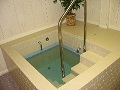
heifer became ritually impure, and had to go to the Mikveh and
wait until the next day before reentering the Temple. The ashes,
however, were retained at a degree of sanctity that surpassed
even that of the sacrifices.
Coming into contact with death
represents straying from the path of Torah. The Torah is the
tree of life and separation from the Torah cuts us from our bond
of life. When we see a fellow Jew who is astray from his
heritage, the Torah tells us that it is our duty to help him.
The red heifer was prepared outside of the Temple to teach us
that we must be ready to make personal sacrifices and leave our
own ‘sanctuary’ in order to ‘purify’ another. Even the Kohen
Gadol, who is supposed to spend his time inside the Temple had
to leave the Temple to purify another Jew and include him in the
Temple. However, we must constantly face the inner sanctuary.
When reaching out to others, we can easily make a mistake and
provide a diluted Judaism, thinking that it’s better than what
they have now. Facing the inner sanctuary reminds us that our
goal is to bring people to the Torah, not change the Torah to
suit people.
As aforementioned, the Parah is
the prerequisite for Pesach. The birth of the Jewish people,
their survival, and final redemption all depend upon self
sacrifice for Jewish continuity.
The tenth Parah Adumah will be
brought by Moshiach. May he be speedily revealed!!
Shabbat Shalom,
Rabbi Biggs
|
| Rabbi Yonassan
Biggs is from Chabad of Great Neck, NY. His website is:
http://www.chabadgn.com/
|
|
|
| |
|
|
|
KOSHER DELIGHT MAGAZINE
|